
Menu
Tree Health Assessment vs. Basic Inspection
Tree Health Assessment Jersey City
The distinction between a full tree health assessment and a simple visual examination is something that many property owners in Jersey City are interested in learning about. Both types of evaluations provide an overview of the current state of the trees on your property; however, the two assessments differ greatly in terms of the breadth of what each examines, how the examinations are conducted, and the level of detail in which the results will be expressed. Understanding the distinctions allows homeowners from Hamilton Park to Newport to make better-informed investment decisions regarding their tree care, as well as identify when a professional evaluation of their urban forest management will be required.
Understanding Tree Inspections
Visual Examination
Tree inspections based on visual observations identify visible, surface-level issues (dead limbs, etc.) that can easily be seen by walking around the base of the tree. Most of the time, tree inspectors are only looking at the “outside” of the tree and do not perform any type of invasive or non-invasive tests. As such, they may miss some types of tree diseases and/or other issues that have not yet shown any noticeable symptoms (such as a fungal infection). Also, many of the neighborhoods in Jersey City (especially those close to the Grove Street PATH Station and Exchange Place) can be difficult for trees to grow in due to the limited amount of light they receive, poor soil quality, and proximity to buildings. Because of this, the ability to visually inspect a tree is severely limited.
Brief Nature of the Inspection
The typical basic tree inspection takes anywhere from 15–30 minutes per tree and focuses on immediate safety issues versus a long-term trend of overall tree health. This short time frame makes it suitable for quickly identifying hazards; however, it misses all the fine details regarding the tree’s overall health that could eventually become hazardous.
Identifying Problems on the Surface
As previously mentioned, basic tree inspections will typically find any issues that can be seen, such as broken branches, leaning trees, etc. While they will not identify any internal decay or root system issues, or any early-stage diseases that have not yet produced any visible symptoms, many diseases and issues can be hidden within a tree’s structure that would go unnoticed in a basic tree inspection.
Tree Health Assessments
Scientific Methodologies
Professional tree health assessments utilize scientifically developed methods to evaluate the health of your trees. Some of the methods include:
- Soil testing
- Root zone evaluation
- Advanced diagnostic tools
By evaluating your trees from the root system to the top of the canopy, we are able to evaluate the health of your trees from every angle possible. This allows us to identify problems with your trees in their early stages of development. Identifying problems with your trees in the early stages of development is the most cost-effective way to treat them.
Assessment Reports
After completing a comprehensive tree health assessment, you will receive a written report detailing the present condition of your trees, any potential problems, and recommended treatments for those problems. This report will also serve as documentation should you need to file an insurance claim related to your trees. It also serves as a reference point for future assessments to help monitor the health of your trees.
Multi-Faceted Analysis
A professional tree health assessment evaluates environmental influences on your trees’ health in addition to the health of the trees themselves. Environmental influences that could impact the health of your trees include:
- Salt exposure from de-icing products applied to your driveway
- Soil compaction from foot traffic
- Air pollutants
- The limited amount of space available for roots to grow in areas like Paulus Hook and along the waterfront developments in Jersey City
Evaluation Scope
Root System Evaluation
One of the primary differences between a basic tree inspection and a comprehensive tree health assessment is the evaluation of the tree’s root system. Typically, basic tree inspections do not evaluate the root system of the tree. On the other hand, a comprehensive tree health assessment does evaluate the root system by conducting a soil evaluation and investigating the root zone of the tree. Evaluating the root system of a tree is critical in cities like Jersey City, where construction, utilities, and soil compaction consistently damage tree root systems.
Detecting Diseases
Another difference between a basic tree inspection and a comprehensive tree health assessment is the detection of diseases. Comprehensive tree health assessments can detect diseases in trees before they show any visible symptoms. The advanced diagnostic techniques used in comprehensive tree health assessments can detect:
- Fungal infections
- Bacterial diseases
- Viral diseases
These diseases would otherwise go undetected until the damage was done, and treatment options were very limited.
Evaluating Environmental Stresses
In addition to detecting diseases, comprehensive tree health assessments evaluate how various environmental factors affect the health of your trees. These environmental factors include:
- Drainage problems
- Soil pH imbalances
- Other urban-related environmental stresses are unique to Jersey City’s location near the Hudson River and industrial areas
When to Use a Basic Inspection
Safety Checks
You should use a basic tree inspection when you want to conduct routine safety checks on your trees. If you have healthy, well-maintained trees, a basic inspection will identify any obvious hazards and give you peace of mind prior to any bad weather. Additionally, if you are required by your insurance company to verify the safety of your trees, a basic inspection will provide the necessary documentation.
For Real Estate Purposes
If you are selling a property, a basic inspection will provide the necessary documentation to support the sale of the property by verifying that there are no obvious hazards associated with the trees on the property.
To Save Money
Finally, if you are limited by budget, you can use a basic inspection to initially evaluate several trees and determine which of those trees require a more detailed, comprehensive tree health assessment. This will allow you to prioritize your spending and allocate your funds accordingly to maximize your safety benefit.
When to Use a Comprehensive Tree Health Assessment
Protect Your Valuable Trees
In Jersey City’s urban environment, mature trees in desirable neighborhoods such as The Heights and Liberty State Park are considered highly valuable. A comprehensive tree health assessment will protect these investments by identifying problems early, before they become permanent.
Liability Protection
If you own a property that has a high degree of liability (e.g., one located near a busy pedestrian area such as Newark Avenue or Kennedy Boulevard), a comprehensive tree health assessment will document your proactive risk management efforts.
Evaluate Construction Impacts
If construction projects are planned that will either damage the root zone of the tree or alter the drainage pattern of water away from the tree, a comprehensive tree health assessment will document the condition of the tree prior to the start of construction and monitor the tree’s condition after construction has been completed.
Identify Declining Tree Performance
If you notice that your trees are showing signs of stress (e.g., slow growth, sparse foliage, unusual leaf color), a comprehensive tree health assessment will diagnose the cause of the decline and provide treatment recommendations.
Tools Used for Diagnostic Purposes
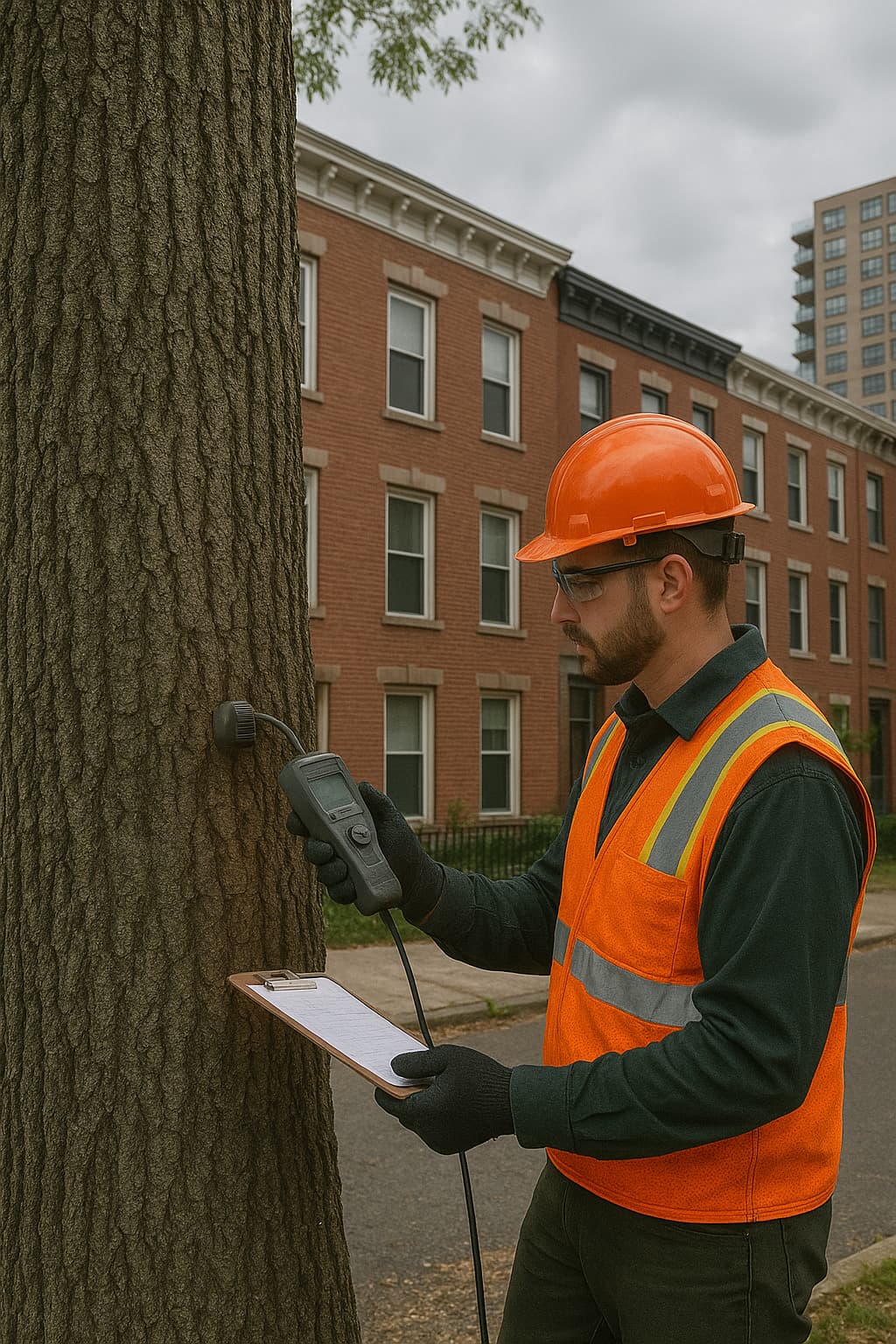
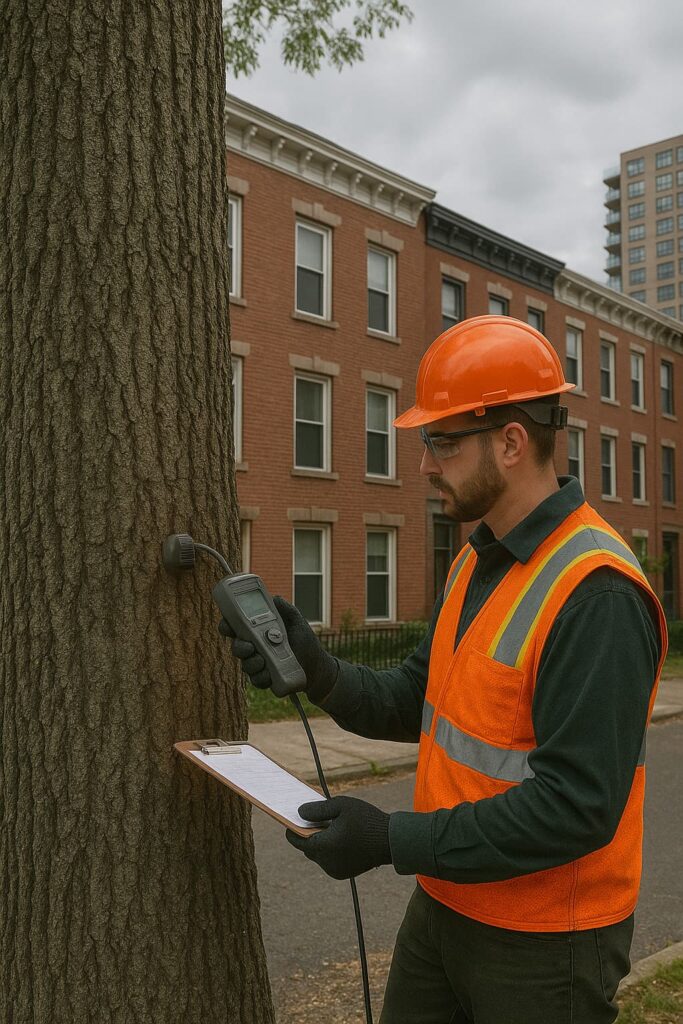
Arborists who conduct comprehensive tree health assessments employ a wide variety of tools designed specifically to aid in the diagnosis of tree problems. Some examples of equipment that arborists might use include:
- Resistance drilling devices to detect internal decay
- Soil penetrometers to measure soil compaction
- pH meters to measure soil pH
In addition to using physical tools, comprehensive tree health assessments may also involve sending samples to laboratories for further study. Examples of laboratory studies that might be conducted as part of a comprehensive tree health assessment include:
- Soil sample analysis
- Plant tissue analysis
- Pathogen identification
Documentation and Tracking Systems
One of the key benefits of using a comprehensive tree health assessment program is the creation of detailed records tracking the health status of your trees over time. This allows arborists to identify trends and implement changes to management strategies to ensure the continued health of your trees. This approach is particularly beneficial for maintaining the health of urban forests such as the one found in Jersey City.
Value of Investing in a Tree Health Assessment Program
While the cost of a comprehensive tree health assessment is higher than the cost of a basic inspection, it offers greater value for valuable specimens. Many times, the earlier that problems are detected, the less expensive they are to correct. A professional tree health assessment program also offers another key benefit: legal protection. Comprehensive documentation from a professional tree health assessment program provides evidence of responsible tree management practices, which can be critical in liability cases. Finally, a comprehensive tree health assessment program offers the best chance of developing a successful treatment plan for your trees. Since each tree is different, a comprehensive tree health assessment will enable you to develop a treatment plan tailored to the specific needs of your tree(s).
Integration of Arborist Services Into Maintenance Programs
Jersey City Tree Services provides the option to integrate our tree health assessment services with our maintenance services. This ensures that once a tree health assessment identifies a problem with one or more of your trees, we can immediately begin working to repair that issue. We believe that providing integrated tree care services is the best way to maintain the health of your trees while keeping your maintenance costs under control.
Developing Emergency Response Plans
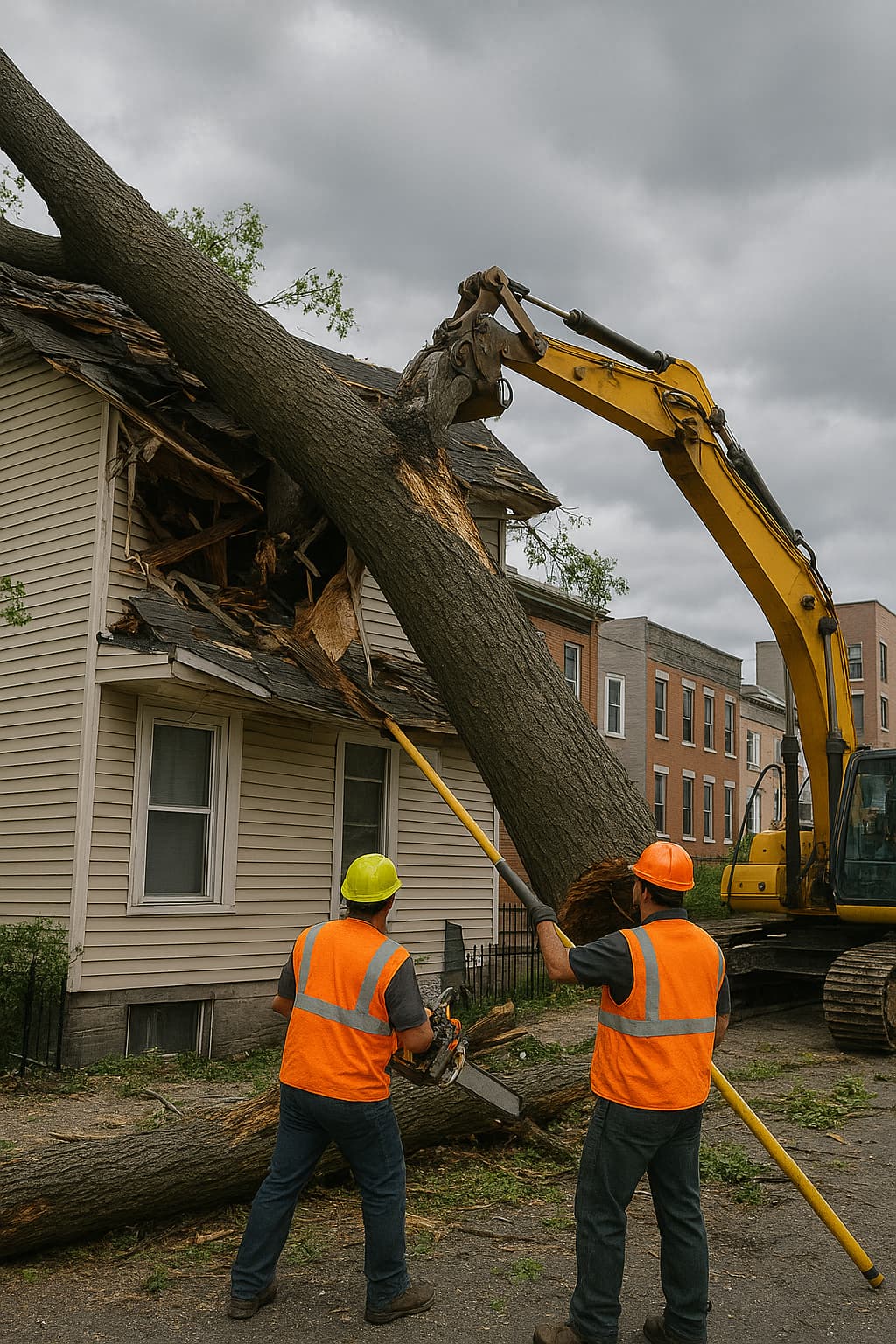
Regular tree health assessments will also help you to identify trees that are at risk of becoming emergencies during severe weather events. Proactively identifying potentially problematic trees before a storm strikes will greatly reduce the likelihood of having to respond to emergencies. Responding to emergencies can be both costly and stressful. By taking a proactive approach to emergency response planning, you can minimize the financial burden of responding to emergencies while minimizing the stress and anxiety associated with dealing with emergency tree removals.
Supporting Long-Term Urban Forest Planning
The results of a comprehensive tree health assessment will also provide you with the information needed to develop long-term urban forest plans. When selecting trees to preserve or replace, being aware of the long-term health trends of the trees you currently have will enable you to select new trees that are likely to thrive in your local climate and will provide you with the best opportunity to develop a balanced and thriving urban forest ecosystem.
Determining the Best Course of Action for Your Property
Whether you are trying to decide whether to conduct a basic tree inspection or a comprehensive tree health assessment for your individual specimen trees, or if you are trying to determine the best course of action for managing the overall landscape of your property, Jersey City Tree Services is here to help. We will review your situation and help you to determine what type of tree assessment is best suited for your specific situation, and what level of assessment will provide you with the greatest value and the least cost.
LATEST POSTS