
Menu
Land Clearing for New Construction in Jersey City
Land Clearing Jersey City
Jersey City’s growing development market continuously generates a need for experienced professional land clearing companies to support the site preparation process for developers and property owners building new construction projects. As the city continues to grow, from the redevelopment of brownfields located along the Hudson River Waterfront to residential growth within established neighborhood areas such as The Heights and Bergen-Lafayette, each project is reliant on a well-planned, environmentally compliant, and effectively executed land clearing strategy. Understanding the unique aspects of land clearing in an urban environment ensures that construction projects will commence with appropriately cleared and prepared sites that are compliant with all relevant regulations and do not pose a risk to adjacent properties.
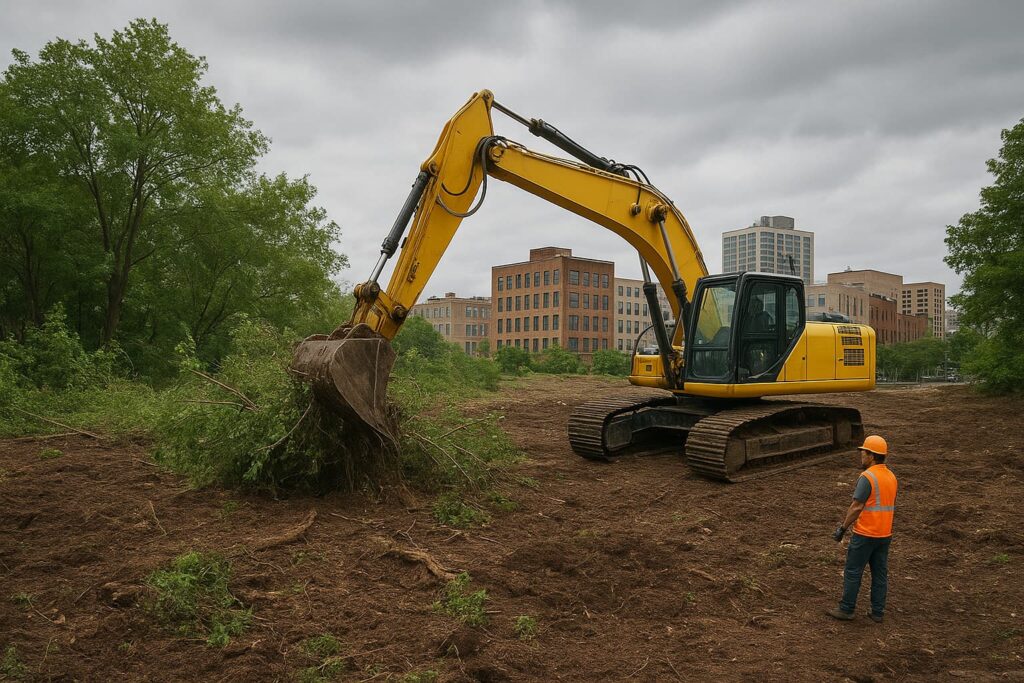
Understanding Land Clearing in Urban Areas – Site Assessment and Planning
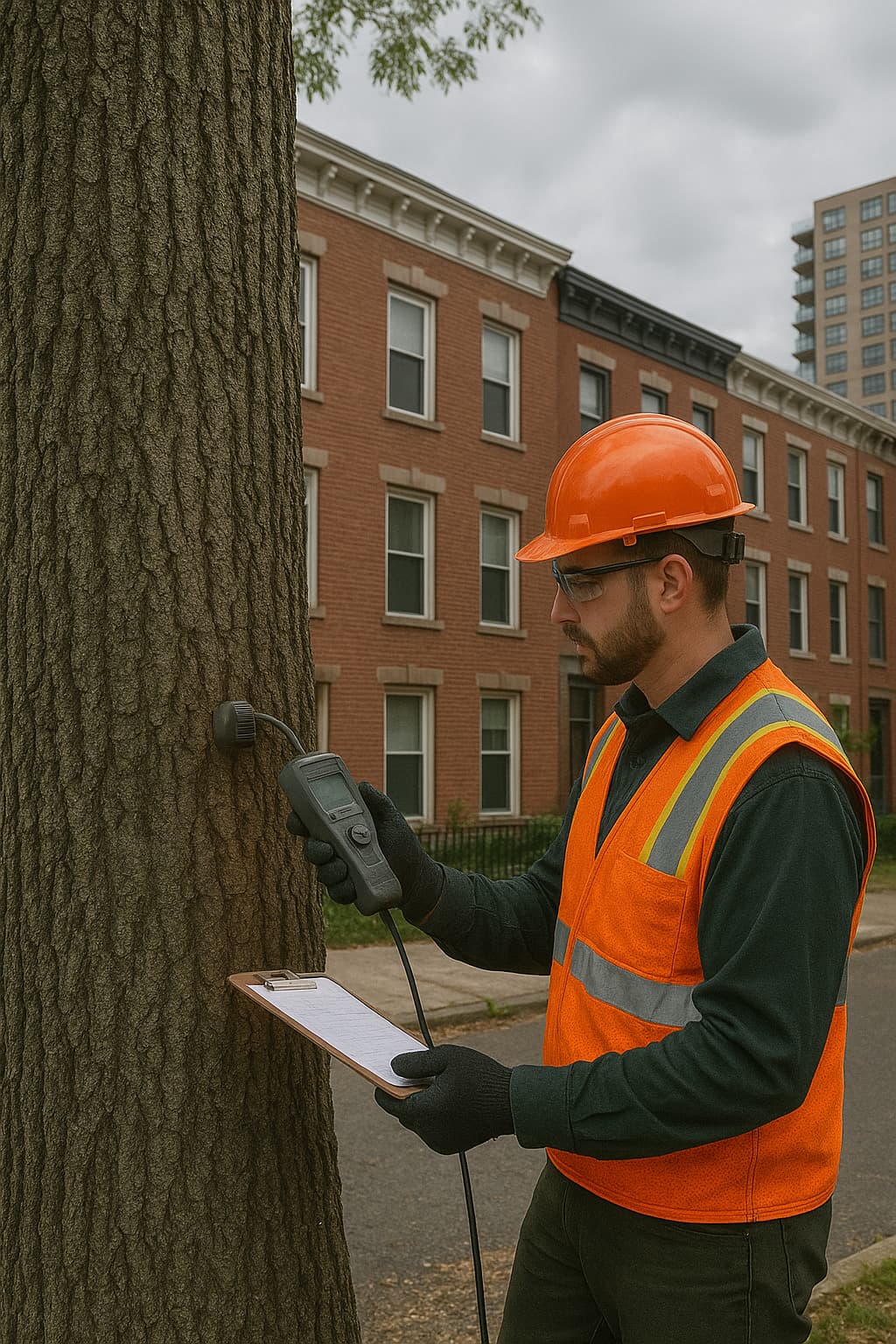
A complete site assessment is essential to the land clearing process in urban environments such as Jersey City. The site assessment will help identify current vegetation, environmental constraints, and any regulatory requirements that apply to your specific location in Jersey City. For example, properties located near Liberty State Park or those in historic districts (such as Paulus Hook) may have special restrictions that will affect the methods used and the timing of the land clearing activity.
Environmental Impact Considerations – Land Clearing in Urban Jersey City
Land clearing in Jersey City, NJ requires careful consideration of environmental protection, especially near the Hudson River and other bodies of water. Proper planning and execution will help to mitigate erosion and protect the quality of the water in our rivers and streams, and will also enable you to meet all applicable environmental regulations related to development throughout Hudson County.
Utility and Infrastructure Mapping – Land Clearing in Jersey City
Before commencing any land clearing activities, it is essential to locate and mark all underground utilities, including, but not limited to, electrical, gas, water, and telecommunication lines. With Jersey City’s dense infrastructure network, the importance of locating all underground utilities before commencing land clearing cannot be overstated to avoid unnecessary expense associated with damaging said utilities during the land clearing activity.
Regulatory Compliance for Jersey City Development Projects – Permit Requirements and Applications
In most cases, all land clearing projects in Jersey City require permits from the city and/or county in which the land clearing activity is taking place, and further permits may be required if the land clearing is being conducted in proximity to a body of water or in an area that is considered environmentally sensitive. It is imperative to understand all permit requirements before conducting the land clearing activity so that you do not experience undue delay and/or non-compliance with the laws and regulations regarding land clearing in Jersey City.
Tree Protection and Removal Laws and Regulations
There are several regulations regarding the removal of trees during a development project in Jersey City, including, but not limited to, requirements to replant or replace trees that were removed and requirements to protect significant specimen trees. Our company understands the regulations and will make every effort to remove the necessary trees while still providing maximum development opportunity within the bounds of the law.
Erosion Control and Sediment Management
All land clearing activities must include some form of erosion control to prevent sediment from entering the storm drain system or into any nearby body of water. Erosion control and sediment management requirements are very stringent for all land clearing activities that take place in proximity to the Hudson River or on sloping land, both of which are common characteristics of Jersey City’s varied landscape.
Professional Land Clearing Services – Selective Clearing Techniques
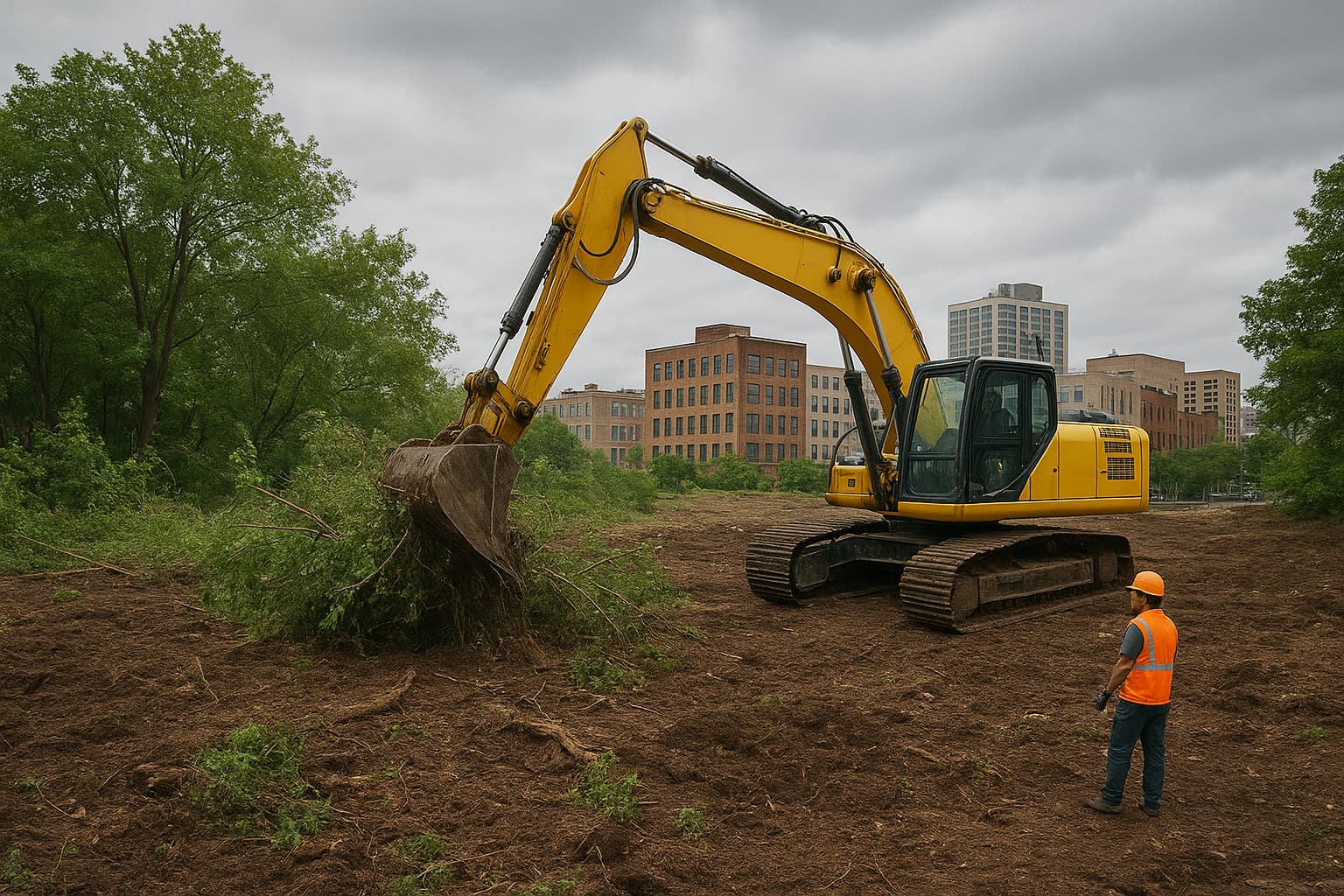
Our company uses modern land clearing techniques to selectively clear only the vegetation that is necessary to prepare the site for construction. We use precision equipment and the expertise of our trained staff to minimize the environmental impact while still completing the land clearing activity. In addition, we can utilize selective clearing techniques to save valuable trees and minimize the impact of the land clearing activity on the surrounding environment.
Full Site Preparation
Our full site preparation service includes removing all trees and brush, stump grinding, disposing of debris, and grading the site to prepare the area for construction. This comprehensive approach to land clearing ensures that construction crews can begin work as soon as possible without having to wait for the site to be cleared again.
Specialized Equipment and Applications
Land clearing in urban environments requires specialized equipment that is designed to operate in tight spaces and to cause minimal disruption to the surrounding environment. Our company maintains a fleet of compact, highly maneuverable equipment that is well-suited to the dense development patterns found in Jersey City’s downtown area around the Grove Street PATH Station and Exchange Place.
Tree Removal and Preservation Strategies
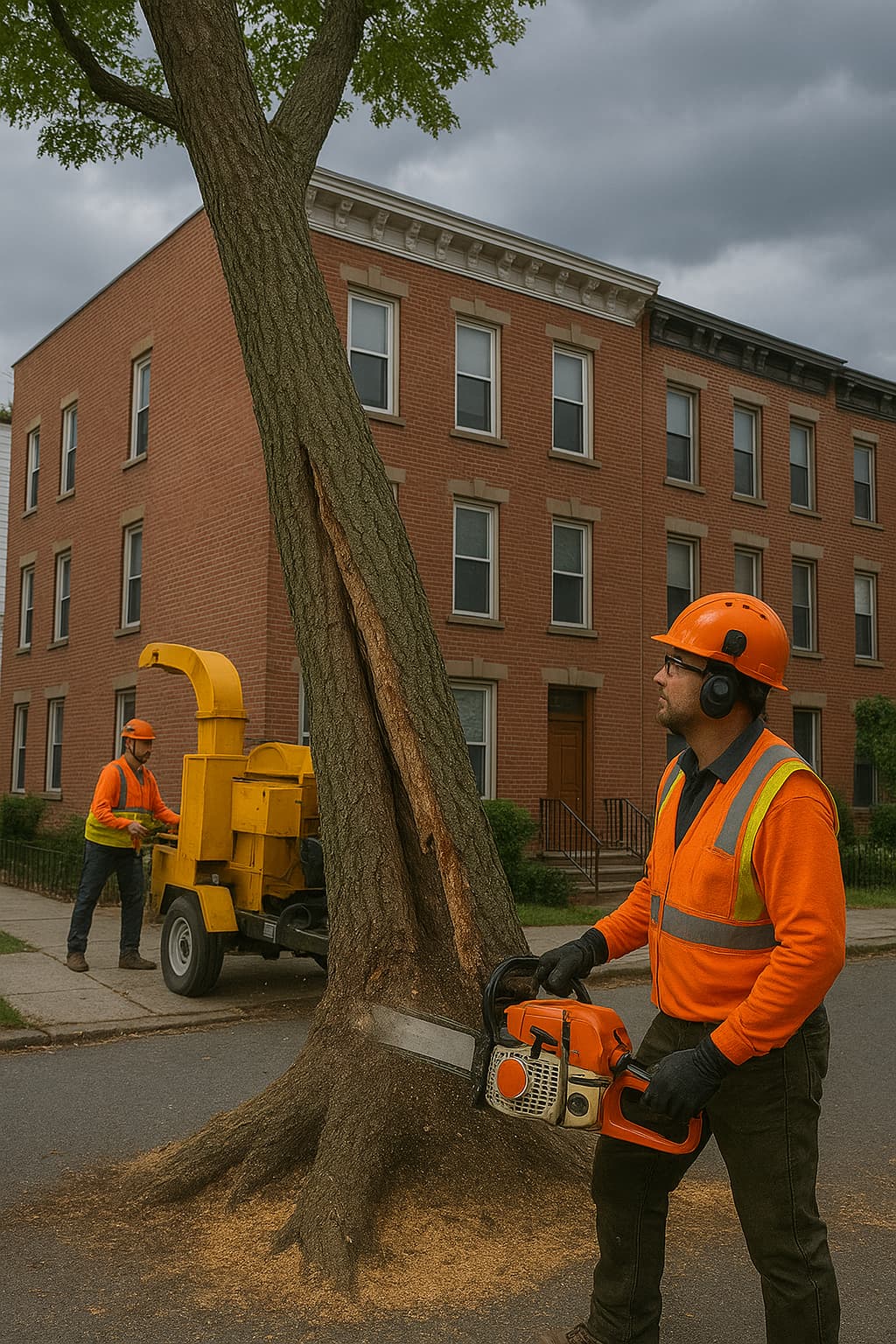
Trees are a vital part of any neighborhood, and many of the mature trees in Jersey City’s established neighborhoods add greatly to the value of each property. Therefore, when selecting tree removal during a land clearing activity, we carefully consider the trees’ value based upon their size, age, condition, etc. Additionally, we are familiar with the local regulations regarding the preservation of certain trees and will work closely with our clients to develop strategies to maximize the number of trees preserved during a land clearing activity while still providing the necessary access for construction.
Root System Management
As part of our full-service land clearing approach, we address the root systems of the trees that are removed to prevent them from interfering with the foundations of new buildings or other underground utilities. By completely removing the roots of the trees, we ensure that there will be no future problems with the construction of new buildings on the site. Since Jersey City has a variety of soil types, this is a critical component of our land clearing services.
Ongoing Support for Long-Term Development
Jersey City Tree Services provides long-term support for our clients’ construction projects by offering expertise in urban forestry, environmental regulations, and construction industry requirements. As the first step in the construction process, land clearing sets the stage for the successful completion of a construction project in Jersey City that enhances the city’s continued growth while promoting environmental responsibility and community development.
LATEST POSTS